

In May 1935, after skillfully crossing the Jinsha River, the Central Red Army continued northward in an attempt to break through the natural barrier of the Dadu River and enter northwestern Sichuan to join forces with the Fourth Front Army.
Chiang Kai-shek mobilized over a hundred thousand troops, planning to encircle and annihilate the Red Army on the southern bank of the Dadu River, and even boasted of “making Zhu and Mao the second Shi Dakai.” The Dadu River, a tributary of the Min River, is 300 meters wide with deep, swift currents and steep mountains on both banks, passable only by ferry or chain bridge—a natural barrier that made crossing extremely difficult for a large force. Moreover, the historical shadow of Shi Dakai, the Wing King of the Taiping Heavenly Kingdom, whose entire army was wiped out here, further highlighted the desperate situation facing the Red Army.
Today is May 14, 2025, 90 years later. Kexinda has arrived at the banks of the Dadu River. The howling wind tells a tragic story, and the rushing waters cannot wash away the unwavering belief in victory. Time never speaks, yet it has always been telling this legendary history.

The Five Ridges wind gently like ripples; the Wumeng Mountains roll like mud balls.
Over four years, Zhongru Kexinda Construction Group has followed in the footsteps of our forebears, passing through Ruijin, the Xiang River, Zunyi, and the Chishui River. This is a dialogue across time and space, a baptism of the soul. Remembering the history of the Long March, carrying forward the red spirit, reflecting on the relics, and drawing lessons from history. On the Long March of the new era, we continue to forge ahead bravely. The people of Kexinda will also closely follow the company's development strategy, achieving personal dreams while accomplishing the company's strategic goals, and striving hard to realize the Chinese Dream of the great rejuvenation of the Chinese nation!
Starting from the source, in Ruijin we listened to the red stories, felt the power of faith, and set foot on this legendary road. At the Xiang River, we looked at the river once dyed red with blood, witnessed the hardships overcome by countless predecessors who shed their blood and sacrificed their lives—every blade of grass and every tree is a loyal soul, every mountain and every rock is a monument.
In 2023, we held our own Zunyi Conference in Zunyi, letting history illuminate the future, testing truth through practice, and completing the team's self-transformation. Last year, we bravely entered the game, broke the deadlock, created a victorious outcome, successfully crossed the Chishui River four times, and walked out of the hundred-thousand-li mountains of Guizhou.
The golden sand beats against the cliff, the clouds are warm; the iron chains span the Dadu Bridge, the cold is biting.
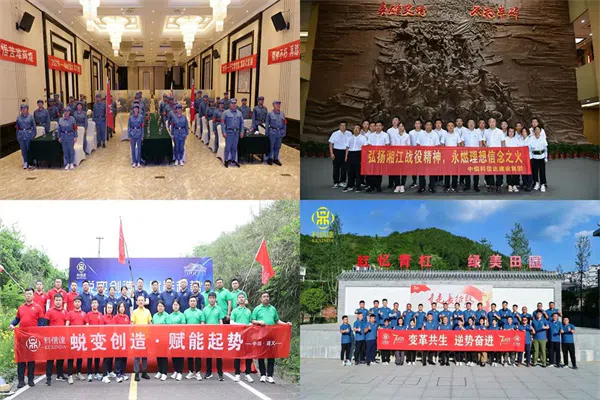
Today, Kexinda has arrived at the fifth stop of the Long March retracing journey—the Dadu River. 164 years ago, another army followed the same path to this place but suffered a disastrous defeat on the banks of the Dadu River.
In 1861, Shi Dakai, the Wing King of the Taiping Heavenly Kingdom, led 70,000 men through the Yi ethnic region to Anshun Field. Their forces far outnumbered the later Red Army, and Shi Dakai was a valiant and skilled warrior, honored as the “Sacred Divine Electric Army Commander, Wing King.” The troops he led were the elite of the elite, unmatched south of the Yangtze River.
However, such an army found itself completely surrounded by the Dadu River, ultimately facing surrender and death.
90 years ago, the Red Army crossed the Jinsha River, passed through the Yi ethnic region, and arrived at Anshunchang. When the Red Army arrived, they also encountered the rainy season, with the river swelling and turbulent, trapping them in a desperate and deadly situation.
Facing the same predicament, the Red Army soldiers showed no fear of death and bravely charged forward. Seventeen warriors forcibly crossed the Dadu River, while the main force captured the Luding Bridge in a daring assault, turning a desperate situation into a path to survival.
The same route, the same situation, and even the army led by Shi Dakai at that time far outnumbered the Red Army, yet the difficulties they faced were less severe. The outcome, however, was one victory and one defeat: Shi Dakai's entire army was annihilated, while the Red Army turned a desperate situation into survival and successfully escaped.
During the evening Party history class, after listening to the teacher tell this story, Gao Junhai, chairman of Zhongru Kexinda Construction Group, asked a question: 'Please think carefully: why did Shi Dakai, with a situation superior to the Red Army, suffer such a crushing defeat? And why did the Red Army, in a weaker position than Shi Dakai, achieve victory?'

Inspiration
Carefully examining these two historical episodes, it is not difficult to see that the policies of Shi Dakai and the Red Army were diametrically opposed. When passing through the Yi ethnic region, Shi Dakai used money to pave the way, bribing the local people with benefits. However, he was later bribed by others who offered even greater benefits, leading to his encirclement.
In contrast, when the Red Army soldiers passed through the Yi ethnic region, they inspired with sincere hearts. 'The Red Army and the Yi people are one family' was not just a simple slogan. The Red Army soldiers did not fight back when struck, nor did they retaliate when cursed. Marshal Liu Bocheng even swore brotherhood with the local leader, Xiao Yedan, by the Yihai Lake, creating the famous 'Yihai Alliance.'
In the vast field of human interaction, there exists a power that transcends language. It does not rely on logical persuasion or authoritative coercion, yet it can make people willingly follow, even changing the course of their lives. This power is inspiration—a spiritual phenomenon like an invisible flame. It warms without burning, shines without blinding, yet it can ignite the hidden possibilities within others' hearts.
Inspiration differs from persuasion, which is rational debate; it is distinct from command, which is the exercise of power; and it is unlike temptation, which caters to desire. Inspiration is a secret dialogue between souls, a natural flow of spiritual energy between people, awakening the nobility and potential within.
Though inspiration is intangible, it leaves traces. Sincerity is its foremost condition; any pretense will block the flow of spiritual energy. Inspiration is not one-way indoctrination but two-way resonance, and sincerity paired with resilience enables its power to withstand the test of time.
When inspiring others, the inspirer also sees the vastness of their own life. While responding to their inner calling, the inspired also enriches the inspirer's spiritual world. This mutual spiritual nourishment creates a bond that transcends the individual, and it is precisely this bond that enables people to jointly pursue heights that no one can reach alone.
The invisible flame never dies out because it passes from one heart to another, and in passing, it not only preserves its original light and warmth but also ignites new flames. Everyone is both a potential inspirer and an eternal inspired one; in the endless cycle of inspiring and being inspired, we jointly partake in the great legacy of sincere communication.
Faith in the heart, strength underfoot
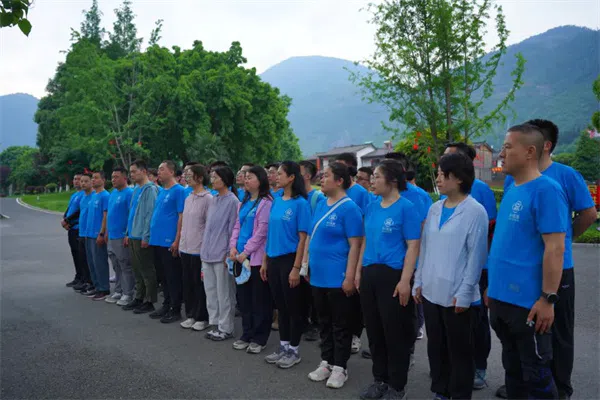
Today we crossed the Ma'an Mountain and arrived at the banks of the Dadu River, feeling the awe inspired by the surging waters. In today's era of uncertainty, the spirit of the Long March still holds irreplaceable contemporary significance. When we face adversity, or cultural conflicts amid the waves of globalization, the collectivist values and strategic resolve embodied in the Long March provide us with vital spiritual resources.
It teaches us how, in a world of constant change, to hold fast to humanity's most fundamental beliefs. The Long March tells us: true victory lies not in conquering the external world, but in guarding the flame within.
The Long March belongs to China, and also to the world; it belongs to history, and even more to the future. Like an ever-flowing spiritual Yangtze, it surges through every soul that yearns for justice and light. When we look back on that winding journey of ten thousand miles, what we see is not only the beacon fires of the past, but also humanity's eternal spiritual totem—as long as there is faith in the heart, there is strength underfoot, and light ahead.